

When wholesale orders slow down, it can be hard to know where to focus. Should you follow up with buyers again? Offer a promotion? Wait until January?
For brands selling to independent retailers, the transition from the holidays into the new year is a useful time to reconnect with interested buyers, support existing stockists, and prepare for upcoming buying opportunities.
The right approach starts with understanding what your retailers need. A buyer focused on holiday shoppers may have little time to review a new collection. Another may need a quick restock. A third may already be planning their spring assortment.
Here’s how to turn a quieter stretch into a practical wholesale sales plan.
Understand what’s slowing down
Before changing your strategy, take a closer look at the slowdown.
Are fewer retailers replying to outreach? Are existing accounts ordering less? Have promising conversations stalled before a first order?
Each situation calls for a different response. As such, it’s important to review:
- Seasonal patterns: Did orders slow during the same period last year?
- Recent outreach: Have you consistently contacted new prospects and followed up with interested buyers?
- Existing accounts: Which retailers are approaching their usual reorder window?
- Buying timelines: Are your target stores purchasing now or planning for a later delivery?
- Ordering obstacles: Can a buyer easily find your prices, minimums, available inventory, and ordering link?
Avoid assuming that a quiet inbox means a retailer has lost interest. Timing may have changed, or the buyer may need more information before moving forward. Use what you find to choose your next action.
Reconnect with wholesale leads who went quiet
Start with retailers who have already shown interest in your brand.
These might include buyers who requested a line sheet, received samples, met you at a trade show, or asked about pricing without placing an order.
Review those conversations and prioritize stores that remain a strong fit. Look for a relevant reason to reconnect: a product they asked about is back in stock, you have new arrivals that suit their assortment, or their next buying window is approaching.
Make the follow-up personal and easy to answer. For example:
Hi Jamie,
You mentioned that our botanical collection could be a fit for your gift assortment. We’ve updated our wholesale line sheet with current availability and a few new additions.Are you still considering new brands for spring? You can browse the collection and order here.
The message gives the buyer context, a useful update, and a clear next step.
If a retailer says the timing is wrong, ask when they expect to review new products. Record that date in your CRM so your next follow-up reflects their plans.
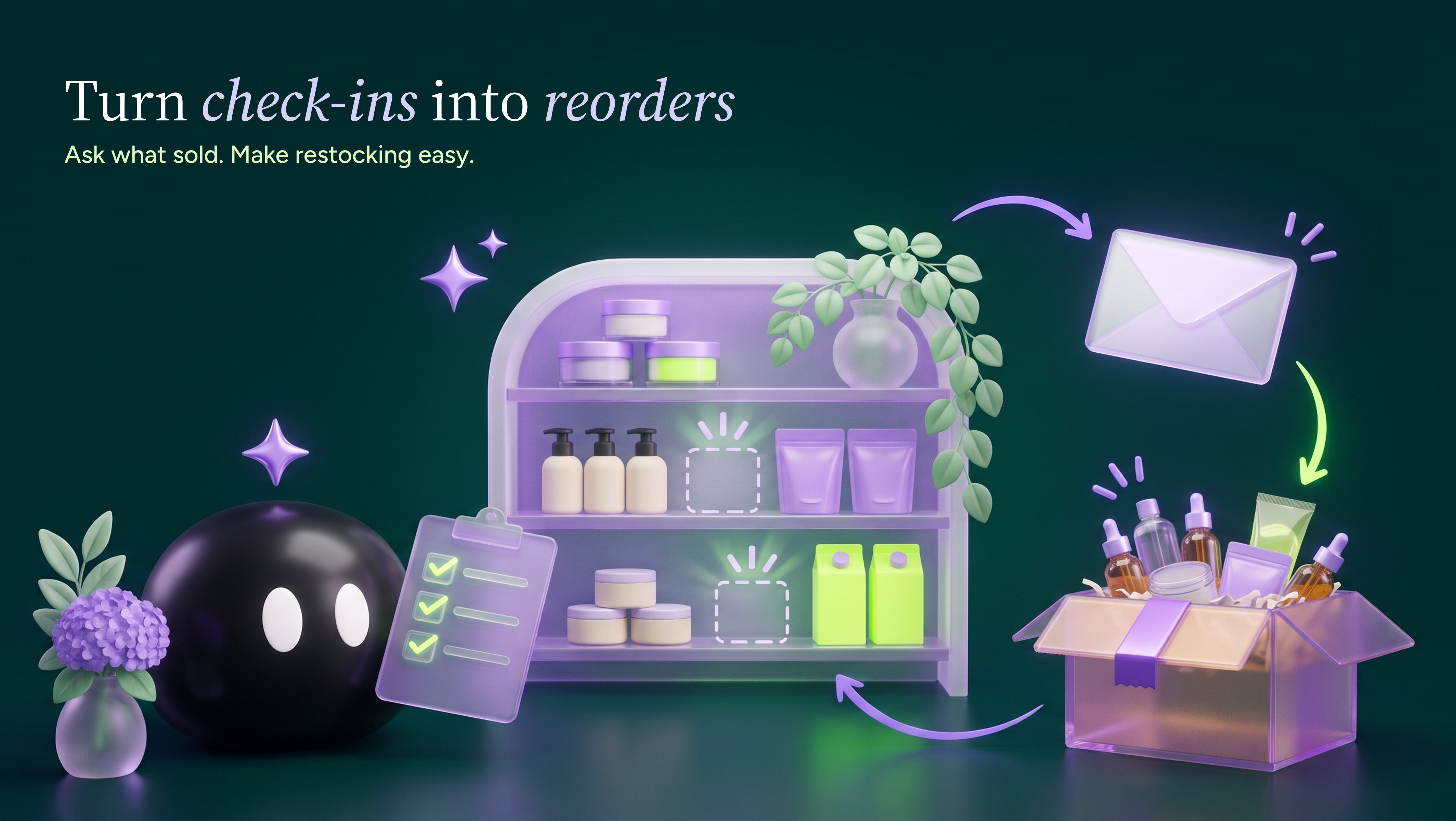
Turn post-holiday check-ins into reorder conversations
Your existing stockists can help you understand what to prioritize next. After the holiday selling period, ask what performed well, what remains on the shelf, and what customers requested.
It’s best to start with accounts that recently ordered, regularly replenish, or carry products suited to the next season. Keep your opening question simple:
Use the response to make a specific recommendation. For example, if a product sold well, confirm its availability and lead time. If something moved slowly, ask about customer feedback before suggesting more inventory. If the retailer is changing their assortment, recommend products that fit the direction they describe.
A useful check-in should help the buyer make a decision. Include current stock information, relevant new arrivals, and a direct reorder link.
Prepare for January buying opportunities before they arrive
If your brand participates in Faire Winter Market or another January market, use the preceding weeks to get ready.
Your preparation should cover three stages.
Before market
Choose the products you want to feature and confirm that your inventory, pricing, photography, and product information are current.
Decide which retailers should hear from you:
- Existing stockists who may need to reorder.
- Interested prospects who have yet to buy.
- Buyers who previously asked you to reconnect around market season.
Plan any offers carefully. Consider your margins, fulfillment capacity, and the type of order you want to encourage.
During market
Make it easy for buyers to understand what deserves their attention.
Highlight bestsellers, relevant new arrivals, stock availability, and order deadlines. Respond promptly to questions about pack sizes, minimums, delivery timing, and product fit.
Tailor your outreach to the relationship. A current stockist considering a reorder needs different information from a retailer evaluating your brand for the first time.
After market
Follow up on conversations that remain open.
If a buyer asked about a particular collection or delivery window, address that detail directly. Confirm next steps for new accounts, and record future follow-up dates for retailers who are interested but not ready.
Make wholesale ordering easier
A quieter period is also a good time to review the experience you give buyers.
Open your line sheet or wholesale storefront and look at it from a retailer’s perspective. Can someone quickly find:
- Product images and descriptions.
- Wholesale prices and suggested retail prices.
- Pack sizes and order minimums.
- Available inventory and lead times.
- Shipping information.
- A clear way to place an order or ask a question.
Check every link you use in outreach. Make sure the information matches your current catalog and that buyers can complete the next step easily.
At Overjoy, we can build your Storefront using your catalog, website, or Faire shop, giving retailers one link to browse your line sheet and order.
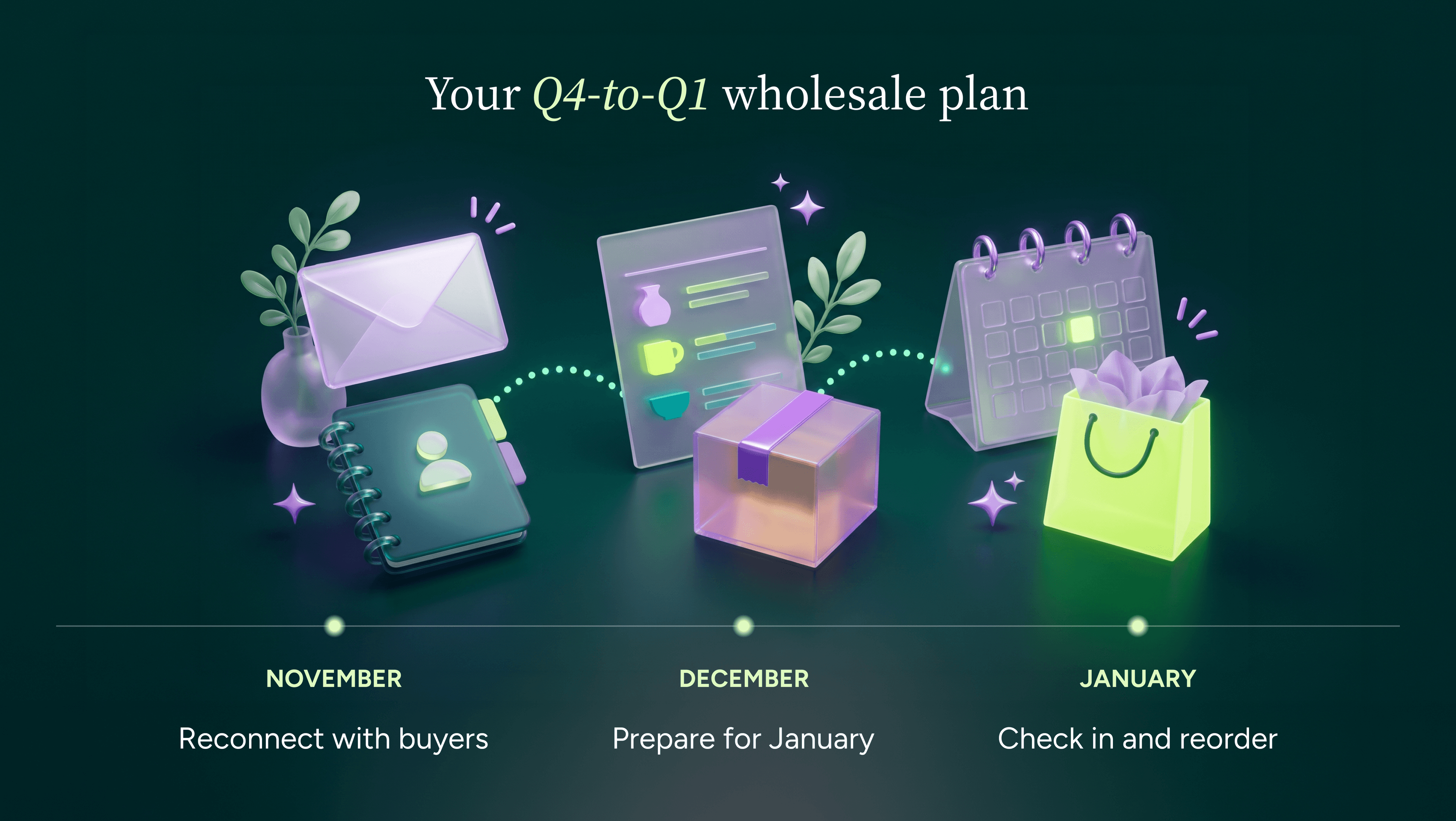
Put your Q4-to-Q1 wholesale plan on a calendar
Choose a manageable set of actions and assign each one a date and an owner.
| Period | Focus | Practical next step |
|---|---|---|
| November | Reconnect with interested buyers | Review stalled leads and send relevant, personal follow-ups |
| December | Support current stockists and prepare for January | Confirm availability, refresh sales materials, and market outreach |
| Early January | Learn from holiday sales | Ask priority accounts what's sold and identify reorder opportunities |
| Around January markets | Help buyers place suitable orders | Coordinate outreach before, during, and after each event |
Adjust this schedule to your category, lead times, and retailers’ buying calendars.
Track progress beyond immediate revenue, too. Useful measures include buyer replies, qualified conversations restarted, reorder discussions, and confirmed next steps. Those signals can help you see which activities are moving accounts toward an order.
Give buyers a useful reason to hear from you
When wholesale sales slow down, focus on the relationships and decisions you can move forward.
Reconnect with a retailer who already knows your brand. Help a stockist replenish a product that sold well. Prepare your collection for an upcoming buying window. Remove an obstacle from the ordering process.
Each action gives your business a clearer path into the new year.
Ready to build your Q1 wholesale plan? Work with Overjoy to prioritize your retailer outreach, prepare for market season, and make ordering easier for your stockists. Book time with us to learn more.